

4×4 Rooftop Tents Camping
GUIDE TO RENTING A CAR WITH A ROOFTOP TENT IN UGANDA
This guide gives you all the details you need to know about 4×4 rooftop tent camping in Uganda and it explains everything you need to know before your road trip, from booking which car, cost estimations about where and when to camp, it also talks about ground camping briefly for those who enjoy outdoor activities.
At this moment Uganda is one of the best travel destination that every globetrotter would love to visit, it has various places endowed with truthful nature, from wide spans of savanna, home to numerous wildlife to mist rolling mountains covered in magical green vegetation.
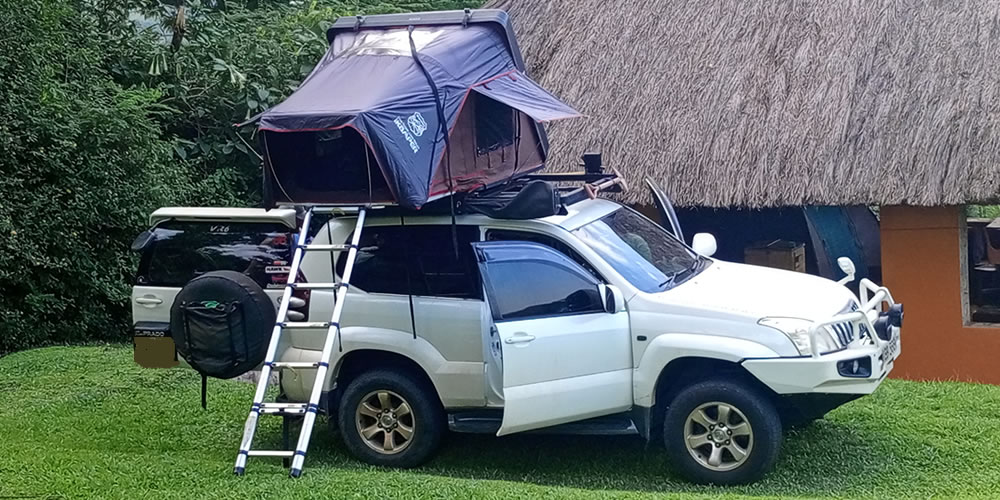
Tranquility Camping
This adds to the stretching but overlapping dramatic water falls amidst the rare sceneries, wildlife, bird watching and the rare but endangered mountain gorillas in Bwindi and Mgahinga national parks also the reason it was named the Pearl of Africa.
Off the beaten path, every traveller would love to explore the undiscovered in a style. One of the fascinating ways is going on a Uganda self guided trip; it is best spiced by renting a 4×4 car fitted with a roof top tent to bit all the odds as you visit with Mother Nature.
This travel style gives freedom to all road trippers to visit with comfort, camp with in gazetted campsites in Uganda national parks and wake up with endless sunrise that writes beautiful bush memories; apart from the expensive lodges, you travel with your master camper that saves you a lot, you choose where and when to pullover whenever the beautiful landscapes call your attention.
Rooftop camping does accommodate families, couples, and small groups with independence and affordability your trip.
A rooftop tent is a fordable camping tent mounted securely on top of a 4×4 vehicle using a reinforced roof rack. Unlike traditional ground tents, it keeps sleepers elevated above the ground, improving safety and comfort.
In Uganda, this elevation is especially useful in wildlife areas where animals such as hippos, hyenas, elephants and cats may pass near campsites at night. Rooftop tents also stay clean and dry, even during rainy weather, and they do not require perfectly flat ground.
We provide rooftop tents as part of a complete camping package. They are also very easy to set and usually include a mattress, mosquito nets, and weatherproof canvas, making them ideal for travelers who want convenience without carrying bulky gear.
Key details on renting a rooftop tent car
It is very important for all globetrotters to always pay attention to details before booking a car with a rooftop tent to traverse Uganda, follow the key factors below.
A 4×4 vehicles,
It is always advisable to rent a robust and high ground clearance four wheel drive car, Most of the roads in Uganda National Parks are very challenging so always mind to hire 4×4 vehicle like Land cruisers( Prado TX, LX 70 and 78 series, V8 Vx and Toyota Hilux for off roads adventure.
Weather Forecast
For you to have a very good experience on your camping safari in Uganda, it is advisable to focus on the weather forecast, this helps you to know which are the dry and wet months in order to have a well-planned tented travel plan. The dry seasons are January – March and June-September whereas the wet season is from April, May an October – December.
Locate a Camping Ground of a site.
For a successful camping trip in Uganda, one is required to locate a well-established camping site from the owners or other gazetted areas especially in wild places courtesy of Uganda National Parks.
For self-guided travellers willing to visit Uganda using a 4×4 rooftop tent vehicle, you are recommended to book and have all the necessary amenities such as security and spaces reserved from authorities responsible like the Uganda Wildlife Authority.
Be rest assured to camp in Kidepo National Park, Murchison Falls National Park, Queen Elizabeth National Park, Lake Mburo National Park.
Be aware of Wildlife after dark.
Always be cautious once you choose to go for a rooftop tent camping experience in the middle of anywhere, there are is plenty of nocturnal wildlife that is very active at night, Hippos, Lions Hyenas, Leopards and elephants are some of the animals to check. |
Otherwise, always try to keep in safe and secure zones as you also read the rules and regulations of the campsite, do miss to get briefed by the rangers on the site about the does and don’ts in case of any animals approach on the campsite.
Fuel planer.
Upon other detailed plans on your self drive safari in Uganda or east African cross border trips, you are advised to know the type of fuel that the rented car takes, is it either gasoline (petrol) or diesel.
This doesn’t on help you have well calculated drives but it also saves you from disappointments in the wild where there are no fuel stations like in national parks. Note! Always consider fueling the reserve tank or curry extra fuel in a reserve for emergencies..
Basic camping knowledge
With a rooftop tent camping, we emphasise that you take in mind to master art of tent deployment, release the secure traps and set the ladders to have your tent open with ease. Having these basics with you will save you a lot of time every evening and morning.
Mind the size of the tent:
The number of people willing to travel and self drive Uganda with a roof top tent will always dictate that size of the tent required for your trip. There are tents for two people, tents for triple. Alternatively consider your rental fitted with 2 doubled tents to accommodate a small group or families with kids. Otherwise make a choice of your tent and confirm the capacity before departure.
Consider the Driving Distance.
Take enough research about the destination of your choice; know the nature of the roads, the altitude and most importantly the driving distance from destination to the other.
Don’t be confused with Google map as some times it may not consider the uncertainties like landslides and the poor conditioned roads upcountry.
The traffic policies such as speed limits on roads determine the distance to cover, so consider first thing first. However; the ample drives gives you guarantee to enjoy the sceneries with beautiful shots
Respect national park rules.
Before you thing of renting a car with a rooftop tent, you have to go through all the park rules and regulations, animals have the right of way on you drive, pay attention to the seed limit (maximum speed in 60km/hr in Uganda national parks) always stay on tracks on games drives otherwise driving off-road is calls for $150 Usd penalty per person in the car.
Prior Plans for kids on a trip.
You will have to take personal responsibilities with kids on you road trip, brief your kids about the camping session in the wild, rooftop tents require climbing ladders with car to avoid injuries in the middle of nowhere.
For cases of ground camping, always do it with kids because it is practical so that is gets easy for them.
Book a rooftop tent in advance.
Always focus on booking a rooftop tent in advance to avoid last minute panic, this type of rental is very competitive especially during the peak season of travellers in Uganda. It also gives the hirer ample time to find the best rental car that fits your priority.
How Rooftop Tents Are Mounted on Vehicles
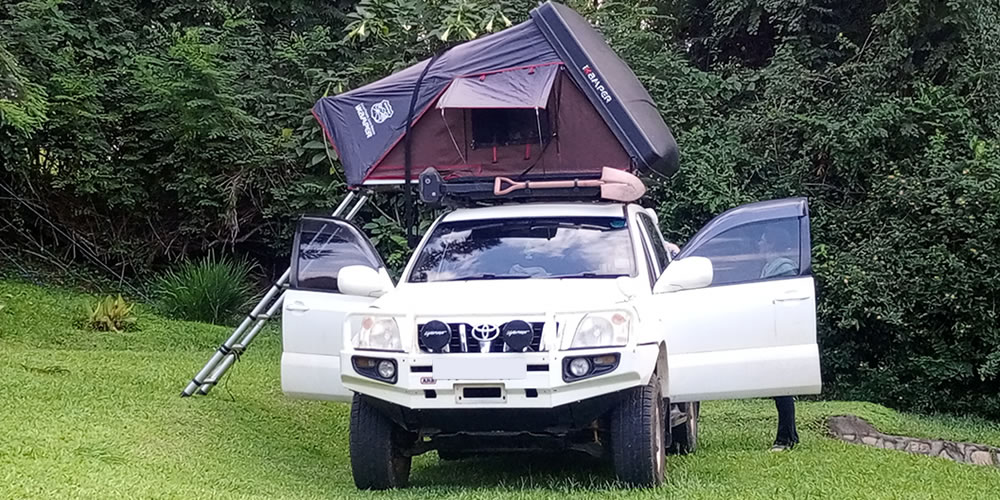
Safe Camping
Mounting a rooftop tent on a vehicle is a carefully planned process designed to ensure safety, balance, and durability during off-road travel. Rental companies in Uganda follow specific steps to make sure the tent remains stable on rough terrain and safe for sleeping.
Step 1: Selecting the Right Vehicle
The process begins with choosing a suitable 4×4 vehicle, rooftop tents can only be mounted on strong four-wheel-drive vehicles such as Toyota Land Cruisers, Hilux Double Cabs, or similar models. These vehicles are built with reinforced frames that can handle additional roof weight both while driving and when parked.
Small cars or soft-roof vehicles are avoided because they cannot safely support rooftop tent loads.
Step 2: Installing a Heavy-Duty Roof Rack
A strong roof rack is installed before the tent itself. This rack is made of steel or heavy-grade aluminum and is fixed securely to the vehicle’s body or chassis, not just the thin roof panel. The roof rack is designed to distribute weight evenly across the vehicle to maintain balance.
The rack must meet load-bearing standards, allowing it to support the tent weight plus the combined weight of people sleeping inside.
Step 3: Positioning the Rooftop Tent on the Rack
Once the roof rack is in place, the folded rooftop tent is lifted onto the rack. The tent is carefully positioned to sit centrally, ensuring equal weight distribution on both sides of the vehicle. Correct positioning is important for vehicle stability, especially when driving on uneven roads or slopes.
Rental technicians align the tent so it opens on the safest side of the vehicle, usually away from traffic or obstacles.
Step 4: Securing the Tent with Mounting Brackets
The tent is then secured using strong mounting brackets and bolts. These brackets clamp the tent base firmly onto the roof rack rails. All bolts are tightened to manufacturer specifications to prevent movement during driving.
Once fixed, the tent becomes a permanent part of the vehicle for the duration of the rental and cannot shift or slide, even on rough tracks.
Step 5: Weight and Safety Check
After installation, technicians check the overall weight and balance of the vehicle. They ensure the total load does not exceed the vehicle’s roof load limit. Suspension and handling are tested to confirm that the vehicle remains safe to drive.
This step is crucial for preventing tipping risks and excessive strain on the vehicle.
Step 6: Installing the Access Ladder
An extendable ladder is attached to the tent. The ladder rests on the ground and locks into position when the tent is opened. It is adjustable to suit different vehicle heights and ground levels, allowing easy and safe access to the sleeping area.
The ladder also helps support part of the tent’s weight when deployed.
Step 7: Folding and Covering the Tent for Travel
When not in use, the tent is folded neatly and covered with a heavy-duty waterproof travel cover. This cover protects the tent from dust, rain, and wind during driving.
Straps are tightened to ensure the tent remains compact and secure while the vehicle is moving.
Step 8: Demonstration to the Renter
Before handing over the vehicle, rental staff demonstrates to you on how to open, close, and secure the rooftop tent properly. This includes showing how to unfold the tent, position the ladder, and pack everything away safely.
Travelers are also advised on safe usage, including opening the tent only when the vehicle is parked on level ground.
Final Note
When correctly mounted, a rooftop tent is extremely safe, stable, and reliable. The mounting system is designed to handle long-distance travel, rough roads, and off-road conditions common in Uganda’s national parks. This step-by-step process ensures campers can enjoy comfort, safety, and peace of mind throughout their journey.
Benefits of Camping with a Rooftop Tent in Uganda
One of the biggest advantages of rooftop tent travel is freedom. You choose your route, decide where to stop, and are not tied to lodge schedules or group tours.
Camping also reduces accommodation costs, especially during long trips or peak tourist seasons. For families, rooftop tents add excitement, as children enjoy climbing into the tent and sleeping above ground.
Another benefit is immersion in nature. Sleeping near wildlife areas allows you to hear animals at night and wake up to birdsong and fresh air. Setup is quick and easy, making it suitable even after long driving days.
How to Rent a Car with a Rooftop Tent in Uganda
Renting a car with a rooftop tent in Uganda is a straightforward process when done correctly. Following the right steps helps you secure a reliable vehicle, avoid last-minute issues, and enjoy a smooth self-drive camping experience.
Start by outlining your travel dates, number of travelers, and destinations. Decide whether you are traveling as a couple, family, or group, as this affects the vehicle size and tent type you need, this will also dictate the type of the vehicle suitable for your trip.
. Also consider how many nights you plan to camp and whether you will stay inside national parks or at community campsites.
Having a clear itinerary helps the rental company recommend the most suitable vehicle and camping setup depending on the selected destination not forgetting to consider the nature topography and the nature of the roads.
Choose the Right Type of Vehicle
Select a proper 4×4 vehicle that can safely carry a rooftop tent. Common options include the Toyota Land Cruiser Prado TX, Land Cruiser V8 or GX, Toyota Land cruiser LX (70, 78 series) and the Hilux Double Cab. Each vehicle has different seating capacity, luggage space, and tent compatibility.
Take in mind that these vehicles are robust enough to accommodate double roof tents, this comes in case of group travellers or families who love writing their memories with camping experience in Uganda on self drive .
Always consider 4×4 rental cars, as they are suitable for Uganda’s park roads and off-road terrain upcountry.
Select the Rooftop Tent Type.
Confirm whether you need a single rooftop tent (usually for two adults) or a double/family rooftop tent that can accommodate additional passengers. Families with children may choose a combination of a rooftop tent and a ground tent.
At this stage, also ask what camping gear is included, such as mattresses, bedding, chairs, tables, cooking gear, or fridges because this may go a with a different price from that of a car.
Research and Contact Reputable Rental Companies
Look for an established car rental company in Uganda that specializes in self-drive safaris and camping vehicles. Send in your inquiry for a further details and quotation by email, or What’sapp.
Provide your travel details, your preferred vehicle and required camping gear. A professional rental company will respond with availability, pricing, and rental terms.
Review the Quotation Carefully
Once you receive a quotation, review it carefully. Check what is included in the daily rate, such as insurance, roadside assistance, unlimited mileage, and camping gear.
Also confirm excluded costs like fuel, gorilla permits, park entry fees, camping fees, fines, or cross-border charges if applicable. Make sure there are no hidden costs.
Confirm Insurance and Rental Conditions
Before confirming the booking, understand the insurance coverage. Most rentals include comprehensive insurance with an excess payable in case of damage. Ask about what is not covered, such as water damage, reckless driving, or off-road misuse.
Also check mileage limits, driver requirements, and cancellation policies.
Car rental Agreement
At this moment, you are mandated to read the car rental agreement and pay attention to all details before breaching the terms and conditions that may result in unnecessary fines.
Always mind to ask the hirer to clarify where you do not understood for simplicity.
Make a Booking Deposit
To secure the vehicle, you will be required to pay a booking deposit, usually around 20–30% of the total rental cost. This is done via bank transfer, card payment, or online payment platforms, depending on the company.
After payment, you should receive a booking confirmation.
Prepare Required Documents
Before arrival, ensure you have all required documents ready. These typically include a valid passport, an international driving permit, and your booking confirmation.
Drivers must usually be at least 23–25 years older, depending on the rental company.
Vehicle Pickup and Inspection
Vehicle pickup commonly takes place at Entebbe International Airport or at your respective hotel or guesthouse. Upon pickup, inspect the vehicle together with the rental staff for clarity about the car.
Check the condition of the vehicle, tires, tools, camping equipment, and rooftop tent operation. Any existing damage should be recorded before departure.
Rooftop Tent Demonstration and Briefing
The rental company operator will demonstrate how to open and close the rooftop tent, use the ladder, and pack the tent safely. He will also explain basic vehicle operation, 4×4 use, and safety guidelines.
This step ensures you are confident using the equipment before starting your journey.
Final Payment and Departure
The remaining balance is usually paid before or at pick up, mostly in cash, by credit card or through Pesapal link.
Once payment is completed and documents are signed, you are ready to begin your road trip on self-drive in Uganda.
Always keep emergency contact details provided by the rental company during your trip.
With everything in place, you can now explore Uganda at your own pace. Drive responsibly, follow park regulations, and enjoy the freedom of sleeping under the stars in some of Africa’s most beautiful landscapes.
Where to Go with a Rooftop Tent in Uganda
Here are some of the common travel Uganda destinations for self-driving with a 4×4 roof top tent.
Murchison Falls National Park is one of the best destinations for rooftop tent camping. It offers open plains, abundant wildlife, and established campsites that allow rooftop tents.
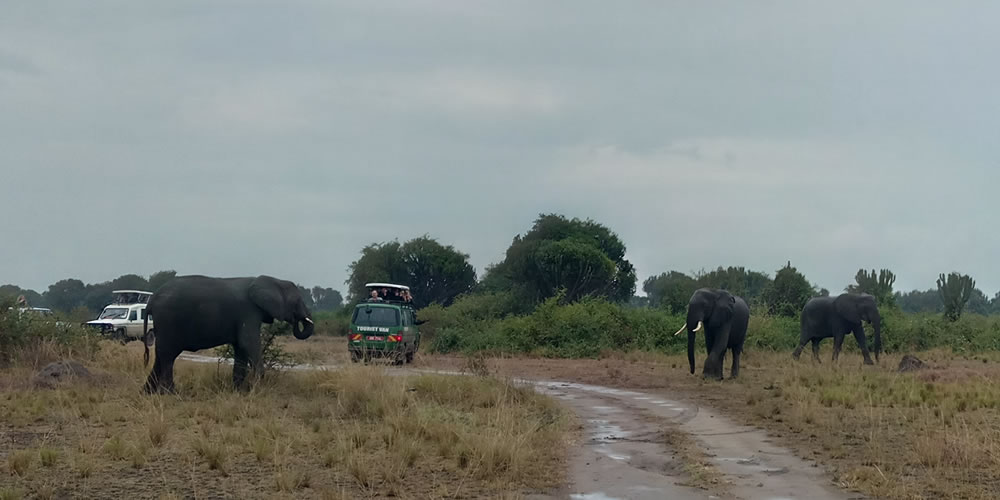
Game drive in Queen Elizabeth
Queen Elizabeth National Park provides diverse landscapes, including savannah, wetlands, and forests. Designated campsites in areas like Mweya and Ishasha make camping safe and enjoyable.
Bwindi Impenetrable Forest is ideal for travelers combining camping with gorilla trekking. Staying at nearby campsites helps manage costs while remaining close to trekking points.
Kidepo Valley National Park is remote and wild, making rooftop tents particularly useful due to limited accommodation options. For beginners, Lake Mburo National Park is close to Kampala and easy to navigate.
Consider your Budget Plan Prior travel.
Daily rental rates for a 4×4 with a rooftop tent generally ranges between $ 85USD to $100USD for a Prado and increase for larger vehicles like the V8 and Land cruiser Lx or Hard top (70 and 78 series). As earlier mentioned before, double tents and additional camping gear may add to the cost.
Fuel, park entry fees, camping charges, and optional items such as fridges should be included in your budget. Longer rentals often come with discounted daily rates, making extended trips more affordable.
Overall, camping with a rooftop tent remains cheaper than lodge-based safaris, especially for couples and families traveling together.
Rooftop Tent Setup and a camping gear
Most rooftop tents come with a sleeping mattress, sleeping bag, mosquito nets, ventilation windows, and a waterproof canvas cover. Some packages also provide bedding, pillows, chairs, tables, and cooking equipment.
The tent opens quickly and folds away easily in the morning, allowing you to start driving without delay.
Ground Tents: A Practical Alternative
Ground tents are still widely a travellers choice when it comes to Uganda camping safaris, it gets to be more accommodating especially if it’s a big group, this can be more suitable than rooftop tents, especially for larger groups or families.
Dome tents usually sleep two to three people and are easy to set up. Family tents can accommodate four to six people and often have separate compartments for privacy. Heavy-duty canvas tents are durable and well-suited for longer stays.
Ground tents are pitched next to the vehicle at designated campsites and work best in secure, well-managed camping areas.
Sleeping Arrangements and Capacity
A single rooftop tent comfortably sleeps two adults. Double rooftop tents can accommodate two adults and one or two children, depending on size.
Combining a rooftop tent with a ground tent is common for families, allowing adults to sleep above while children sleep on the ground nearby or either way. Large family ground tents can sleep up to six people comfortably.
Practical Camping Tips for Uganda
You are always recommended to drive during day and respect speed limits inside p